 RapidHeat
Quick answer
Plug-in heaters are safe when they carry UKCA or CE marking, have overheat protection, are plugged directly into a wall socket (not an extension lead), kept about 1 metre from curtains, bedding and furniture, and never covered or left unattended. Ordinary plug-in heaters must not be used in bathrooms.
What we checked: We checked guidance from Electrical Safety First, UK fire services and GOV.UK product-marking rules. Last reviewed 11 October 2026. How we research.
Key takeaways
- It is safest not to leave any portable heater running unattended.
- Not when bought from reputable sellers and used correctly. Risks mainly come from extension leads, blocked vents and items placed too close.
- UK safety bodies advise plugging heaters directly into a wall socket because their high power draw can overload extension leads.
- Fire services advise against leaving heaters unattended, including while you sleep.
- Electrical Safety First advises plugging heaters directly into a wall socket because of the risk of overloading.
Modern plug-in heaters are safe when bought from reputable sellers and used properly. Most heater fires involve misuse — blocked vents, extension leads or items too close. Here’s what to know.
Safety features to look for
Choose a heater with:
- Overheat protection that cuts power automatically
- Tip-over protection for freestanding models
- A thermostat and timer
- UKCA or CE marking and clear manufacturer details
Safe use at home
Electrical Safety First and UK fire services advise:
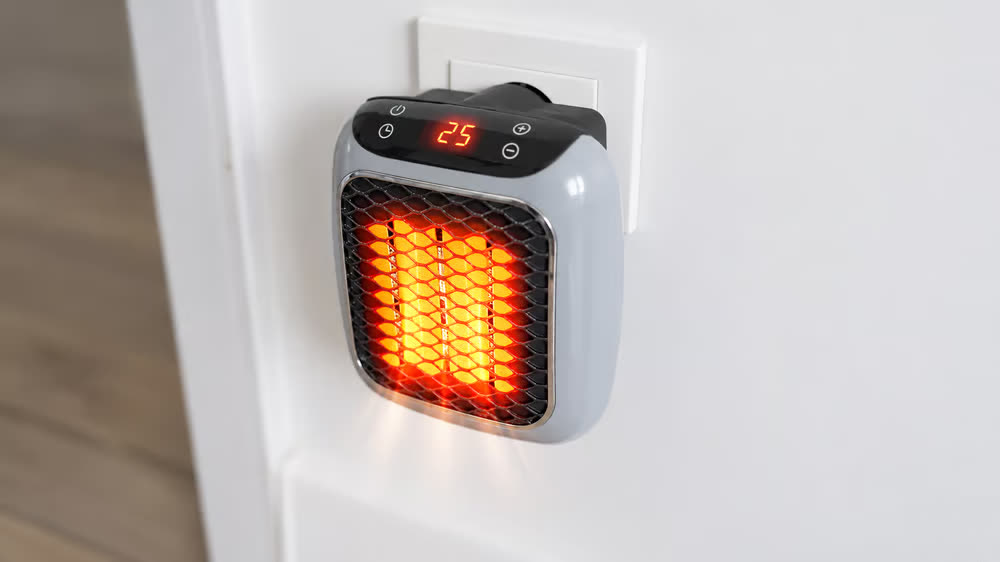
- Plug heaters directly into a wall socket — avoid extension leads
- Keep at least 1 metre clear of curtains, bedding and furniture
- Never cover the heater or dry clothes on it
- Don’t leave it running unattended or overnight unless designed for it
- Supervise children and pets around any heater
Can you use a plug-in heater in a bathroom?
Only if it is specifically rated for bathroom use (with a suitable IP rating) and installed according to UK bathroom zone rules. Standard plug-in heaters should not be used near baths, showers or basins. RapidHeat’s seller mentions bathroom use but we could not find a published IP rating, so check with the seller first.
UK safety standards to look for
Heaters sold in Great Britain should carry a UKCA or CE mark, showing the manufacturer declares conformity with UK safety rules. Room heaters are normally tested to BS EN 60335-2-30, the standard for household room heaters. You can ask a seller for the Declaration of Conformity if it is not published.
Extension leads and sockets
Electrical Safety First advises plugging heaters directly into a wall socket. A 2–3kW heater draws close to the 13A limit of a standard extension lead, and adding other appliances can overload it. Even a low-power wall-plug heater should go straight into a wall socket that is in good condition — never into an adaptor.
Signs a socket is struggling include a warm plug, scorch marks, a burning smell or crackling. Stop using it and get an electrician to check.
Children, pets and older relatives
- Choose a heater with a cool-touch casing or guard
- Keep cables out of reach and away from walkways
- Use a heater with a timer and overheat cut-out
- Check the heater is turned off at bedtime or when leaving the room
- Fit a working smoke alarm on every floor and test it monthly
Heaters in bathrooms
UK wiring rules restrict sockets near baths and showers, and ordinary plug-in heaters are not designed for wet rooms. Bathroom heaters should be fixed models with a suitable IP rating, installed by an electrician. RapidHeat does not publish an IP rating, so do not use it in a bathroom.
Plug-in heater safety checklist
Use this list every winter, for any heater:
- UKCA or CE mark on the product or packaging
- Overheat protection (and tip-over switch on freestanding models)
- Plugged directly into a wall socket — no adaptors or extension leads
- About 1 metre clear of curtains, bedding, clothes and furniture
- Never covered or used to dry clothes
- Switched off when you leave the room or go to sleep
- Smoke alarm fitted and tested
Checking for product recalls
Faulty heaters are occasionally recalled. You can search the UK government's Product Safety Database and Electrical Safety First's recall checker using the product name or model number. Register your appliance with the manufacturer where possible so you are told about any recall.
Warning signs to stop using a heater
Stop using any heater immediately if you notice a burning or melting smell, scorch marks on the plug or socket, a damaged cable, sparks or crackling, or if it switches itself off repeatedly. Unplug it once safe to do so and contact the seller.
Is RapidHeat right for you?
Likely a good fit if you…
- Want to warm one small room or desk area
- Want to keep central heating off while you sit in one room
- Have no floor space for a radiator
- Value a 30-day money-back guarantee (per seller)
Probably not for you if you…
- Need to heat a large, open-plan or draughty room
- Expect it to replace central heating or cut bills dramatically
- Need a heater for a bathroom
- Need published wattage and certificates before buying
Frequently asked questions
Are plug-in heaters safe to leave on overnight?
It is safest not to leave any portable heater running unattended. If you do, use one with a thermostat, timer and overheat protection, and keep it well clear of bedding.
Are plug-in heaters dangerous?
Not when bought from reputable sellers and used correctly. Risks mainly come from extension leads, blocked vents and items placed too close.
Is it safe to plug a heater into an extension lead?
UK safety bodies advise plugging heaters directly into a wall socket because their high power draw can overload extension leads.
Is it safe to leave a heater on overnight?
Fire services advise against leaving heaters unattended, including while you sleep. If you must, use one designed for it with a thermostat, timer and overheat protection.
Can I plug a heater into an extension lead?
Electrical Safety First advises plugging heaters directly into a wall socket because of the risk of overloading.
Is RapidHeat safe?
The seller describes overheat protection. It does not clearly publish safety certificates, so ask for the UKCA/CE declaration before buying.
How far should a heater be from furniture?
Keep heaters about 1 metre from curtains, bedding, sofas and anything that could catch fire.
Are ceramic heaters safer than other heaters?
Ceramic elements run cooler than exposed wire elements, but all heaters need the same basic precautions.
Can a plug-in heater cause a fire?
Yes, if misused — for example covered, too close to fabric or plugged into an overloaded extension lead. Follow the safety checklist.
Are wall plug heaters safe?
They can be, if they are properly marked, have overheat protection and are plugged into a sound wall socket. Avoid adaptors.
Sources and further reading
Read our full RapidHeat Heater review for specifications, pros and cons and our verdict.