 RapidHeat
Quick answer
The cheapest electric heater to run is the lowest-wattage heater that keeps you warm enough, controlled by a thermostat and timer. At 27p per kWh, a 400W heater costs about 10.8p an hour, a 1kW heater 27p and a 2kW heater 54p. Low-power heaters suit small rooms; larger rooms need more power.
What we checked: We used the standard kW × rate formula and an example UK rate of 27p per kWh. Last reviewed 11 October 2026. How we research.
Key takeaways
- The lowest-wattage heater that keeps you comfortable. A 400W heater costs about 10.8p an hour at 27p per kWh.
- At the same wattage they cost the same per hour. Oil radiators hold heat longer, which can reduce how often they switch on.
- They cost the same per kWh, but can feel warmer for a seated person, so you may use them at lower power or for less time.
- Multiply kW by 8 and by your rate. A 1kW heater at 27p per kWh costs about £2.16 for 8 hours at full power.
- It is a low-power heater, so it costs less per hour than a 2kW model, but it also gives out less heat.
Every electric heater turns electricity into heat at almost the same efficiency, so the cheapest one to run is simply the heater that uses the least power while keeping you comfortable. Here is how the numbers work, with costs for every common wattage.
Cost per hour for every common heater
Find your heater's wattage on its label:
| Heater power | Per hour | 5 hours a day | Per week (5h/day) | Winter (750 hours) |
|---|---|---|---|---|
| 400W | 10.8p | 54p | £3.78 | £81 |
| 600W | 16.2p | 81p | £5.67 | £121.50 |
| 800W | 21.6p | £1.08 | £7.56 | £162 |
| 1,000W (1kW) | 27p | £1.35 | £9.45 | £202.50 |
| 2,000W (2kW) | 54p | £2.70 | £18.90 | £405 |
| 3,000W (3kW) | 81p | £4.05 | £28.35 | £607.50 |
Cheapest heater type by situation
Because efficiency is the same, the cheapest type depends on how you use it:
| Type | Typical power | How it heats | Best for | Watch out for |
|---|---|---|---|---|
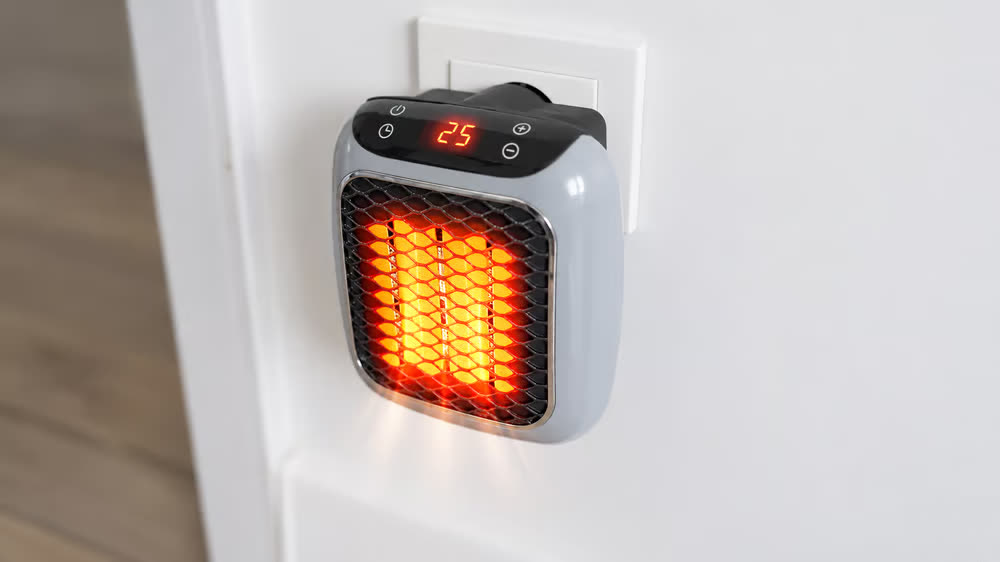
| Wall-plug ceramic (e.g. RapidHeat) | Low, usually under 1kW | Fan blows air over a ceramic element | Topping up one small room | Limited output; fan noise |
| Fan heater | 1–3kW | Fan over a hot wire element | Fast heat in short bursts | Noise; high cost per hour at full power |
| Oil-filled radiator | 0.5–2.5kW | Heats oil that radiates slowly | Longer, steady heat in bedrooms | Slow to warm up; heavy |
| Convector heater | 1–2kW | Warms air that circulates naturally | Whole small/medium rooms | Takes time; heat rises to ceiling |
| Halogen / infrared | 0.4–1.2kW | Radiant heat warms people directly | Sitting in one spot | Bright glow; only warms what it faces |
Why 'efficient' heaters are not cheaper per hour
A 1kW oil radiator, a 1kW fan heater and a 1kW infrared panel all use 1kWh of electricity every hour at full power. Differences in cost come from how long each needs to run to keep you comfortable. Radiant heaters can feel warm faster for a seated person; oil radiators keep giving off heat after switching off. Neither changes the price per kWh.
How to make any heater cheaper to run
- Heat only the room you are in and close the door
- Use a thermostat set to 18–21°C
- Use a timer to avoid heating empty rooms
- Draught-proof doors and windows
- Measure actual use with a smart plug
A low-power option for small rooms
Cheapest heater for each room
| Room | Cheapest practical option | Why |
|---|---|---|
| Home office (desk) | Infrared panel 300–600W | Warms you directly at low power |
| Box room | Low-power ceramic 400–600W | Small space needs little output |
| Bedroom | Oil radiator with thermostat | Holds heat, cycles off often |
| Living room | Central heating or convector with thermostat | Larger space needs more output |
| Sofa / armchair | Heated throw under 100W | Warms the person, not the room |
Heater costs at different electricity rates
If your unit rate is different from 27p, scale the figures. At 24p per kWh, a 1kW heater costs 24p an hour; at 30p it costs 30p. The rule is simple: one kilowatt for one hour costs exactly your unit rate.
Standing charges are paid regardless of use, so they do not change the cost of running a heater.
Is RapidHeat right for you?
Likely a good fit if you…
- Want to warm one small room or desk area
- Want to keep central heating off while you sit in one room
- Have no floor space for a radiator
- Value a 30-day money-back guarantee (per seller)
Probably not for you if you…
- Need to heat a large, open-plan or draughty room
- Expect it to replace central heating or cut bills dramatically
- Need a heater for a bathroom
- Need published wattage and certificates before buying
Frequently asked questions
What is the cheapest electric heater to run UK?
The lowest-wattage heater that keeps you comfortable. A 400W heater costs about 10.8p an hour at 27p per kWh.
Which electric heaters are cheapest to run: oil or fan?
At the same wattage they cost the same per hour. Oil radiators hold heat longer, which can reduce how often they switch on.
Are infrared heaters cheaper to run?
They cost the same per kWh, but can feel warmer for a seated person, so you may use them at lower power or for less time.
How much does it cost to run a heater for 8 hours?
Multiply kW by 8 and by your rate. A 1kW heater at 27p per kWh costs about £2.16 for 8 hours at full power.
Is RapidHeat the cheapest heater to run?
It is a low-power heater, so it costs less per hour than a 2kW model, but it also gives out less heat. The seller did not clearly publish its wattage.
Is electric heating cheaper than gas?
Usually not per unit of heat. Electricity costs roughly three to four times more per kWh than gas under recent UK price caps.
What uses less electricity: a heater or an electric blanket?
An electric blanket or heated throw usually uses far less — often under 100W compared with 500W–3kW for a heater.
Does a thermostat make a heater cheaper?
Yes. It switches the heater off once the room is warm, reducing total energy used.
Sources and further reading
Read our full RapidHeat Heater review for specifications, pros and cons and our verdict.